
Chapters
Romania is larger and more diverse than many travelers expect. Mountains, medieval cities, rural regions, and coastal areas are spread across the country, which makes the choice of arrival airport more important than it might seem at first glance.
Unlike destinations where one airport serves almost everything, airports in Romania are strongly regional. Landing in the right city can reduce long driving days, allow for smoother itineraries, and make it easier to focus on the part of the country a traveler actually wants to explore.
This guide looks at the main international airports in Romania, explaining:
- what regions they serve best,
- what type of trip they are most suitable for,
- and which airlines operate regular flights there.
Main International Airports in Romania
Henri Coandă International Airport (OTP – Bucharest)
Henri Coandă International Airport is Romania’s largest and busiest airport and the country’s primary international gateway. Located just outside Bucharest, it handles most long-haul and intercontinental connections and offers the widest range of flight options year-round.
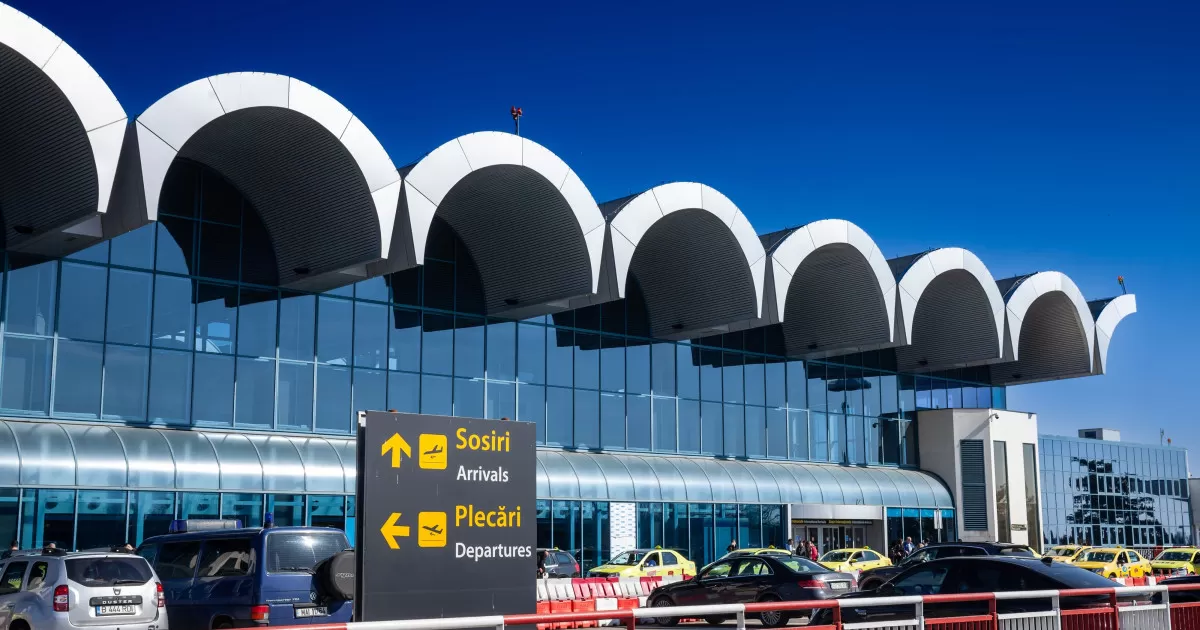
Photo source: aeroportul-otopeni.info
Why land here:
This is the most practical choice for first-time visitors, travelers combining Romania with other European destinations, or those planning a classic, multi-region itinerary.
Where you can go from here:
- Bucharest
A layered city shaped by royal ambition, communism, and modern reinvention. Visitors explore Belle Époque architecture, Orthodox churches, massive communist-era landmarks, creative neighborhoods, and a fast-growing food scene. It’s also the best place to understand Romania’s recent history. - Sinaia & Peleș Castle
The former royal summer residence, set in the Carpathian Mountains. Peleș is one of Europe’s most refined royal castles, combining German Renaissance style with exquisite interiors. - Brașov & Bran Castle
Brașov offers a well-preserved medieval center framed by mountains, while Bran Castle blends real medieval history with modern mythmaking. - Curtea de Argeș & Poenari Fortress
Curtea de Argeș is central to Romanian royal and medieval history, while Poenari Fortress (for active travelers) is the authentic stronghold associated with Vlad Țepeș. - Danube Delta (longer journey)
The most biodiverse wetland in Europe, best explored by boat, ideal for wildlife, birdwatching, and slow travel.
Airlines operating on Henri Coandă International Airport:
Aegean Airlines, Aeroitalia, Air Bucharest, Air France, Air Serbia, Arkia Airlines, Animawings, Austrian Airlines, British Airways, Corendon Airlines, Croatia Airlines, EL AL, Eurowings, FlyDubai, HiSky Europe S.R.L., Israir, KLM – Royal Dutch Airlines, LOT Polish Airlines, Lufthansa, Pegasus Airlines, Qatar Airways, Ryanair, SkyUp Airlines, Sky Vision Airlines, Swiss International Air Lines, TAROM, Turkish Airlines, Wizz Air
Cluj-Napoca International Airport Avram Iancu (CLJ)
Cluj-Napoca International Airport is the most important airport in Transylvania and the second busiest in Romania. It serves a dynamic cultural region and is particularly well connected to Western and Central Europe.
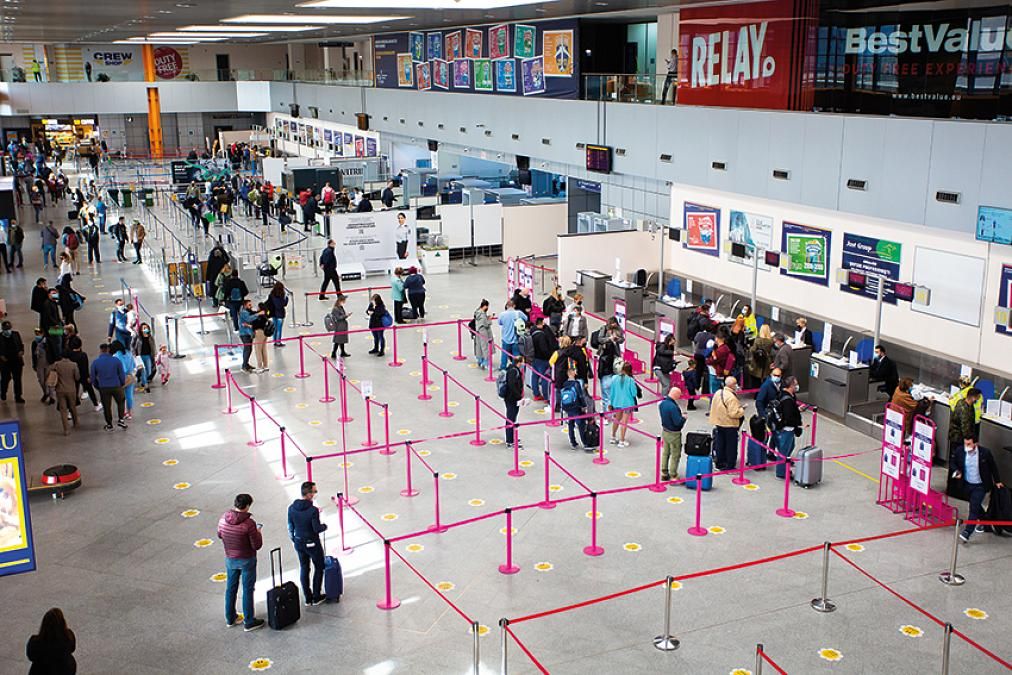
Photo source: romania-insider.com
Why land here:
Cluj is an excellent entry point for travelers who want to focus on Transylvania and avoid backtracking from Bucharest.
Where you can go from here:
- Cluj-Napoca
A youthful, creative city shaped by universities, festivals, and a strong cafe culture. It represents modern Transylvania at its most dynamic. - Turda Salt Mine
A spectacular underground site combining Roman history, industrial heritage, and contemporary design. - Rimetea
One of Romania’s best-preserved traditional villages, known for white houses, Hungarian heritage, and dramatic mountain scenery. - Apuseni Mountains
A landscape of caves, forests, hay meadows, and remote villages, ideal for hiking, nature travel, and rural immersion. - Maramures (longer transfer)
Famous for wooden churches, living folk traditions, and a rural rhythm that has largely disappeared elsewhere in Europe.
Airlines operating on Cluj-Napoca International Airport:
Wizz Air, Ryanair, Lufthansa, Turkish Airlines, LOT, TAROM, HiSky, Pegasus Airlines, Swiss International Air Lines, AnimaWings.
Timișoara International Airport Traian Vuia (TSR)
Located in western Romania, Timișoara International Airport serves the Banat region and has strong links to Central Europe.
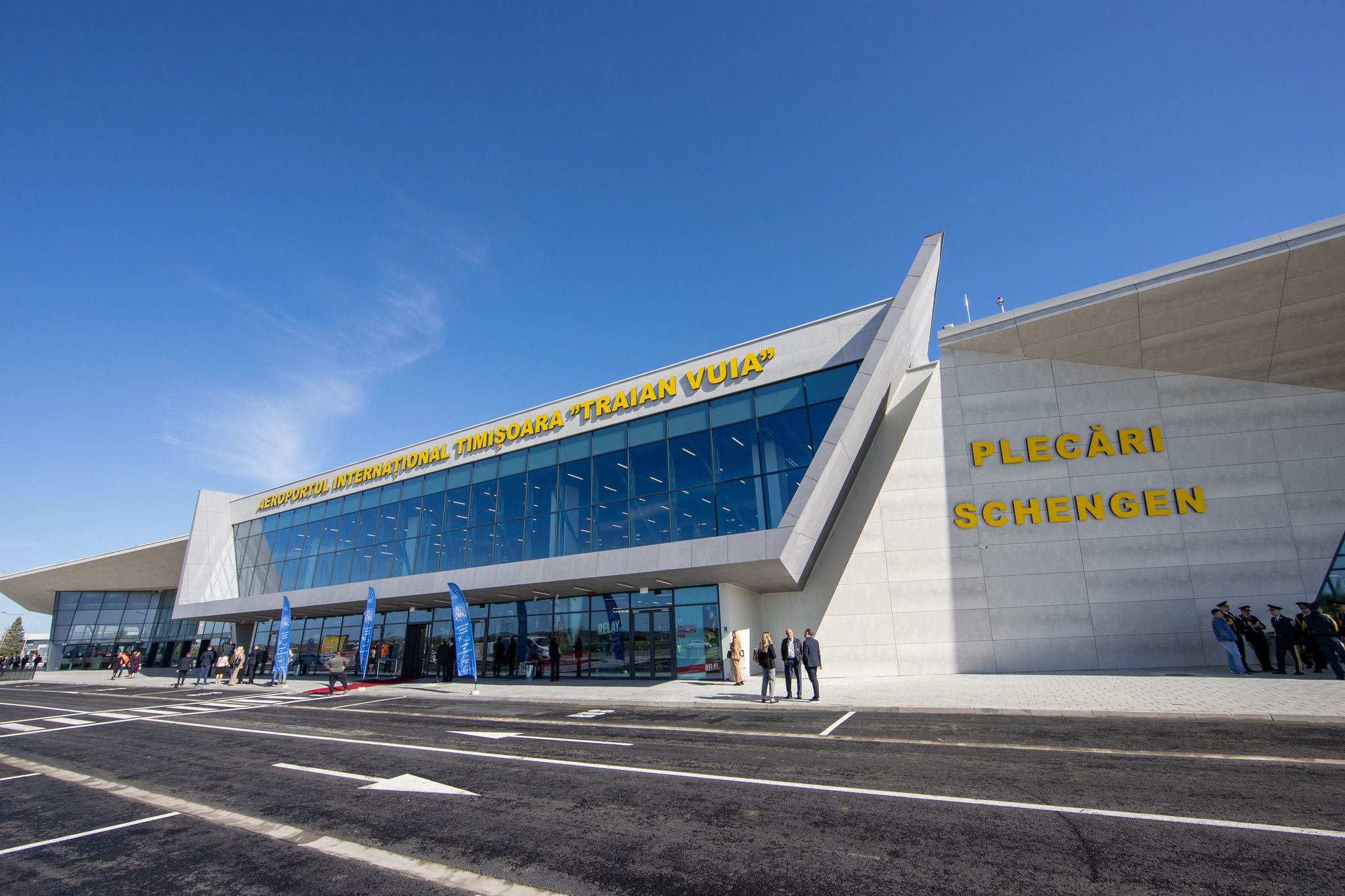
Why land here:
This airport works well for travelers interested in western Romania or those combining Romania with neighboring countries.
Where you can go from here:
- Timisoara
A spacious, elegant city defined by large squares, Secession and Baroque architecture, and a strong cafe and cultural life. The city feels relaxed, walkable, and distinctly Central European in atmosphere. - Banat countryside
The rural areas surrounding Timisoara reflect centuries of multicultural settlement. Villages show Romanian, German (Swabian), Serbian, and Hungarian influences in architecture, cuisine, and traditions. Compared to Transylvania, the Banat countryside feels more open, flatter, and agricultural, offering a different rural experience. - Oradea (via road)
One of Romania’s most architecturally refined cities, known for its exceptional Art Nouveau heritage. Oradea’s compact historic center, thermal spa tradition, and proximity to Hungary make it a strong cultural stop. - Arad
A historic city on the Mures River with Austro-Hungarian architecture and an important role in Romania’s modern national history. - Cross-border travel into Hungary and Serbia
Timisoara is the most logical Romanian entry point for multi-country itineraries. Hungary (Szeged, Budapest) and Serbia (Novi Sad, Belgrade) are easily accessible, making this airport ideal for travelers interested in regional exploration rather than a single-country focus.
Airlines operating here:
Lufthansa, TAROM, Wizz Air, AnimaWings, HiSky.
Iași International Airport (IAS)
Iași International Airport serves northeastern Romania and the historical region of Moldavia. It has grown significantly in recent years, with more international connections than in the past.
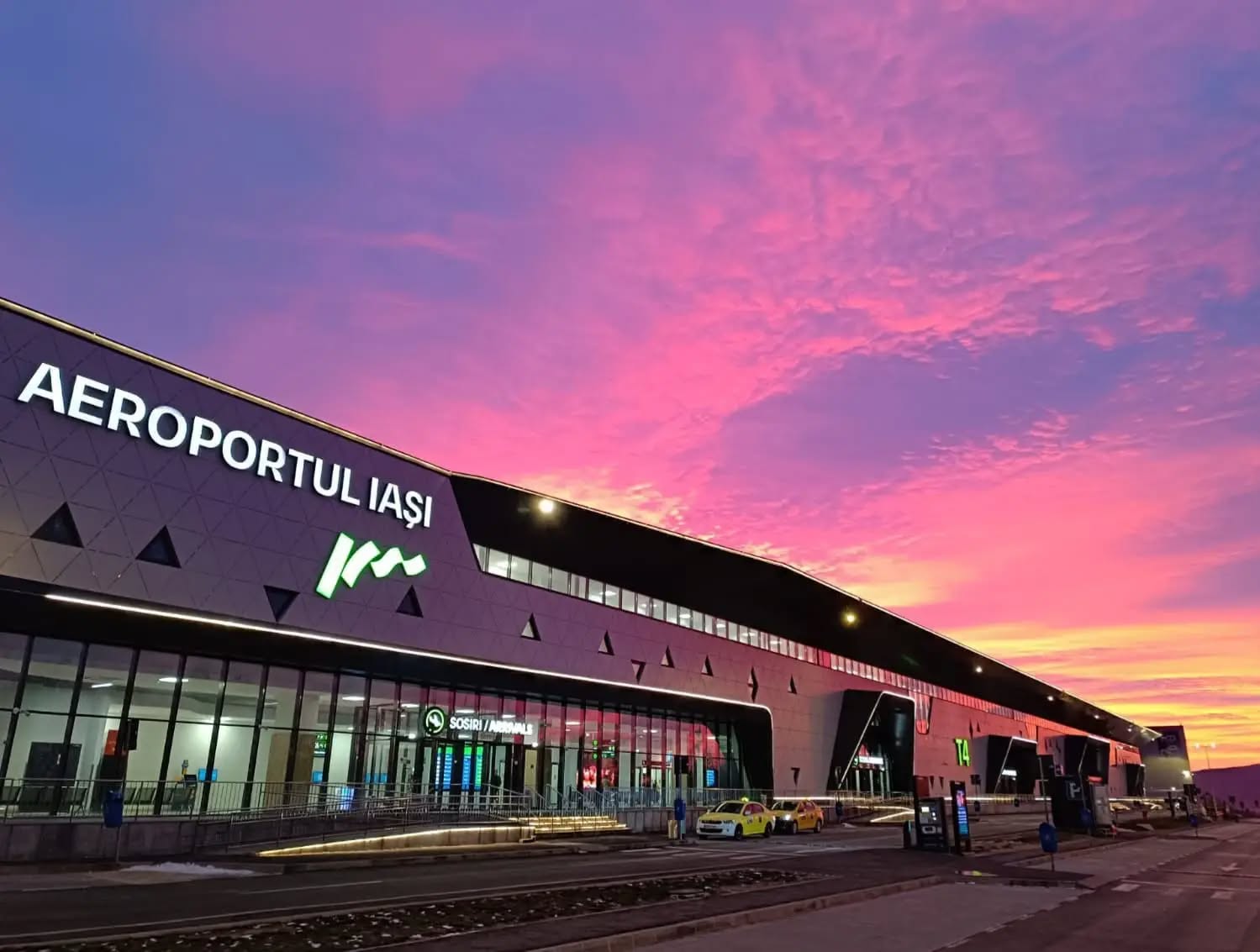
Photo source: facebook.com/Aeroportul Iasi
Why land here:
Ideal for travelers interested in history, religious heritage, or regional culture away from the more visited parts of Romania.
Where you can go from here:
- Iasi
A former capital of Moldavia and one of Romania’s most important cultural centers. The city is known for its monasteries, museums, literary heritage, and strong academic tradition - Monasteries and religious heritage of Moldavia
The region around Iasi is dotted with monasteries and churches that continue to play an active role in community life. Religious festivals and pilgrimages are an important part of the local rhythm. - Bucovina (longer but meaningful journey)
Home to the UNESCO-listed painted monasteries, Bucovina blends art, faith, and history in a rural mountain setting. The journey itself passes through traditional landscapes and small towns, reinforcing the sense of regional identity. - Rural Moldavia countryside
Less visited by international tourism, this area offers an unfiltered view of village life, agriculture, and local traditions. Travel here rewards patience and curiosity rather than speed. - Republic of Moldova
Iasi is the most logical Romanian entry point for combining Romania with Moldova, whether for cultural exploration, wine regions, or family-history-focused travel.
Airlines operating here:
Wizz Air, Ryanair, TAROM, Austrian Airlines, AnimaWings, HiSky, Fly Dubai.
Sibiu International Airport (SBZ)
Sibiu International Airport is smaller than Cluj or Bucharest but strategically located in the heart of Transylvania.
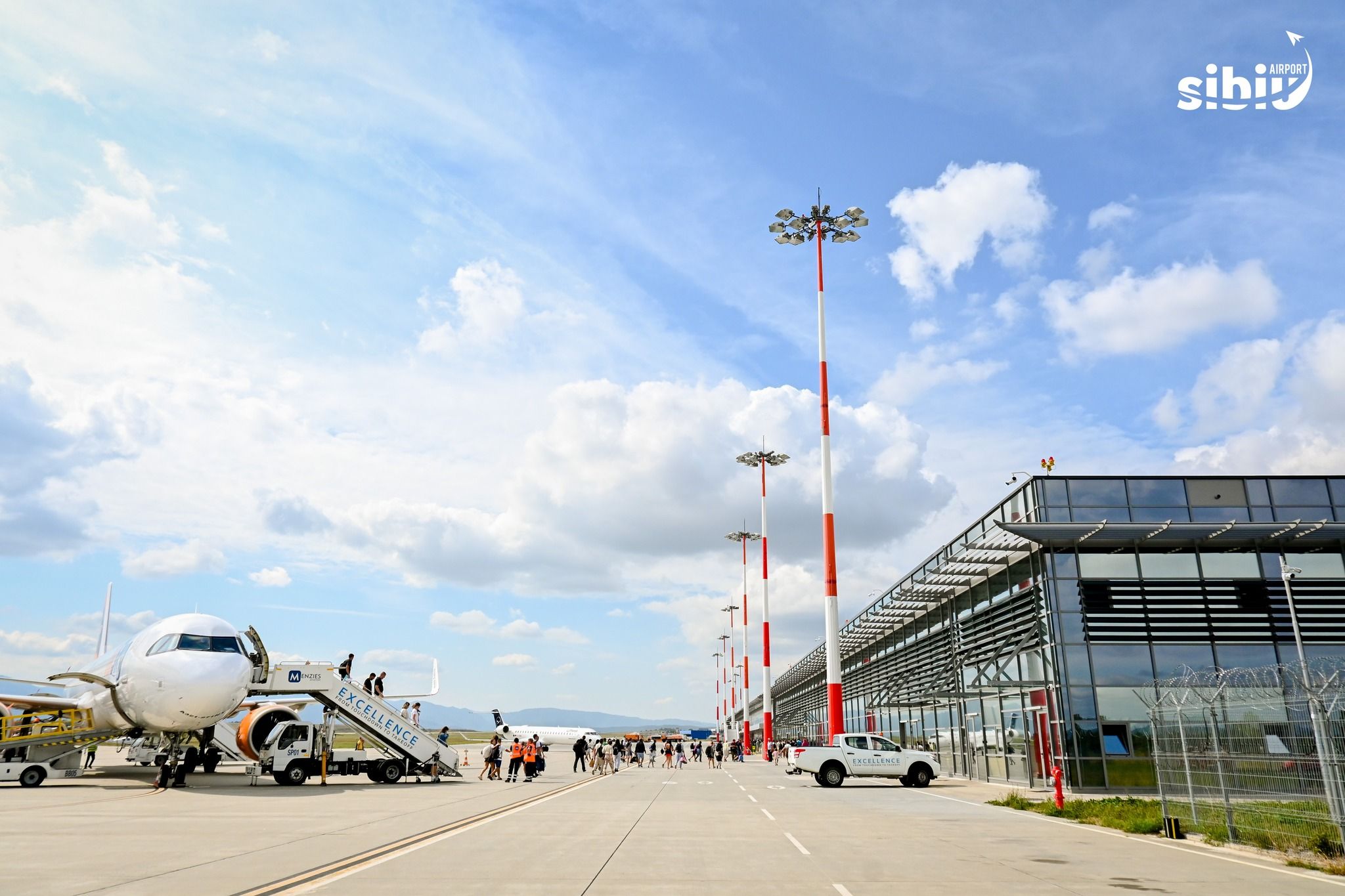
Photo source: facebook.com/SIBIU International Airport
Why land here:
Best suited for travelers looking for a cultural, slower-paced Transylvania experience with minimal driving.
Where you can go from here:
- Sibiu
A former Saxon city with a remarkably well-preserved historic center, known for its large medieval squares, pastel-colored houses, and distinctive rooftops. Sibiu has a strong cultural life, a refined gastronomic scene, and a calm, elegant atmosphere that makes it ideal for slow-paced exploration. - Saxon villages and fortified churches (Biertan, Valea Viilor, Alma Vii)
These villages illustrate centuries of Saxon settlement in Transylvania. Fortified churches, traditional houses, and agricultural landscapes offer insight into a rural world shaped by community defense, craftsmanship, and continuity. - Sighisoara
One of the best-preserved inhabited medieval citadels in Europe. Its towers, walls, and cobbled streets provide a rare sense of continuity, as the citadel is still lived in today rather than functioning solely as a museum. - Fagaras Mountains & the Transfagarasan Road
Romania’s highest mountain range offers alpine scenery, glacial lakes, and hiking routes. The Transfagarasan Road, open seasonally, crosses the mountains and is considered one of Europe’s most scenic drives. - Southern Transylvanian countryside
A region suited for slow travel, featuring rolling hills, traditional farming, and discreet rural guesthouses. This area is ideal for travelers interested in everyday life, local food, and landscapes shaped by centuries of agriculture.
Airlines operating here:
Lufthansa, Austrian Airlines, Wizz Air.
Brașov-Ghimbav International Airport (GHV)
Brașov-Ghimbav is Romania’s newest international airport and serves one of the country’s most visited regions.
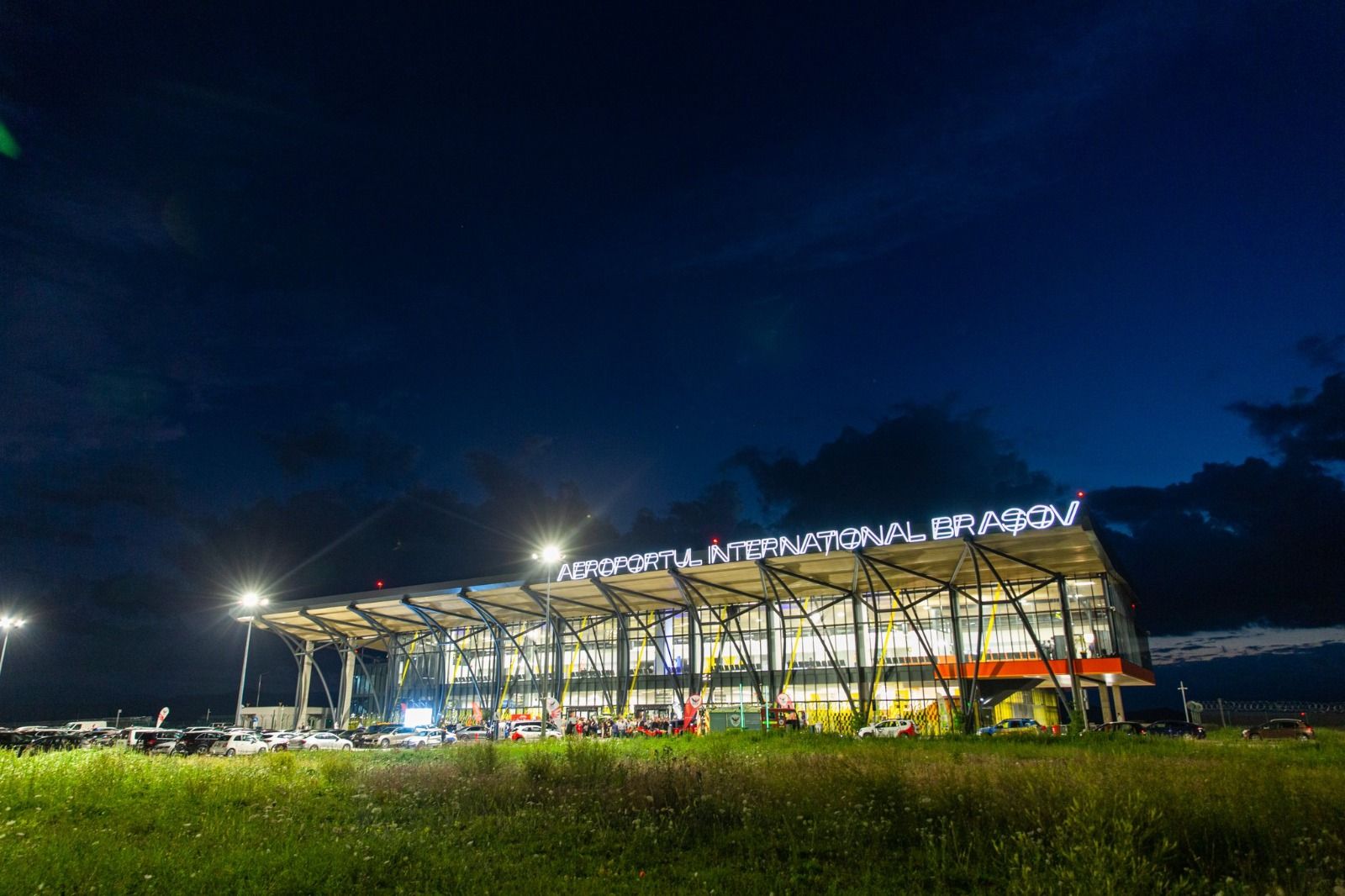
Photo source: voluntarbv.ro
Why land here:
When connections are available, this is the most direct option for travelers focused on castles, mountains, and classic Transylvania highlights.
Where you can go from here:
- Brasov
A former Saxon town with a well-preserved medieval center, Black Church, fortified walls, and mountain backdrop. Brasov functions both as a cultural destination and a logistical base for the surrounding region, offering easy access to nature without sacrificing urban comfort. - Bran Castle
Originally a 14th-century border fortress, Bran Castle sits dramatically between Transylvania and Wallachia. While popularly associated with Dracula, its historical role as a customs point and defensive stronghold gives it real medieval substance beyond the legend. - Peles Castle & Sinaia
Peles is Romania’s most refined royal residence, built in the late 19th century as a summer retreat for the royal family. Sinaia itself developed as an elegant mountain resort, blending royal history, architecture, and alpine scenery. - Rasnov & Prejmer fortified sites
Rasnov Fortress and Prejmer’s fortified church illustrate how medieval communities defended themselves in a frontier region exposed to repeated invasions. Prejmer is UNESCO-listed and offers strong historical context for Saxon settlement patterns. - Rural Transylvania (Viscri and surrounding villages)
A network of Saxon villages with fortified churches, traditional houses, and agricultural landscapes. These villages illustrate continuity of rural life and architecture over several centuries. - Carpathian Mountains & nature
Immediate access to hiking, alpine landscapes, and mountain resorts, making this airport particularly appealing for travelers who want culture and nature in equal measure.
Airlines operating here:
Enter Air, TAROM, HiSky, MGA Airlines, Animawings, SKY Express, FlyOne, Aegean Airlines, Nile Air, Corendon Airlines, Fly Lili, Wizz Air
Mihail Kogălniceanu International Airport (CND – Constanța)
This airport serves Romania’s southeastern coast and plays a seasonal but important role.
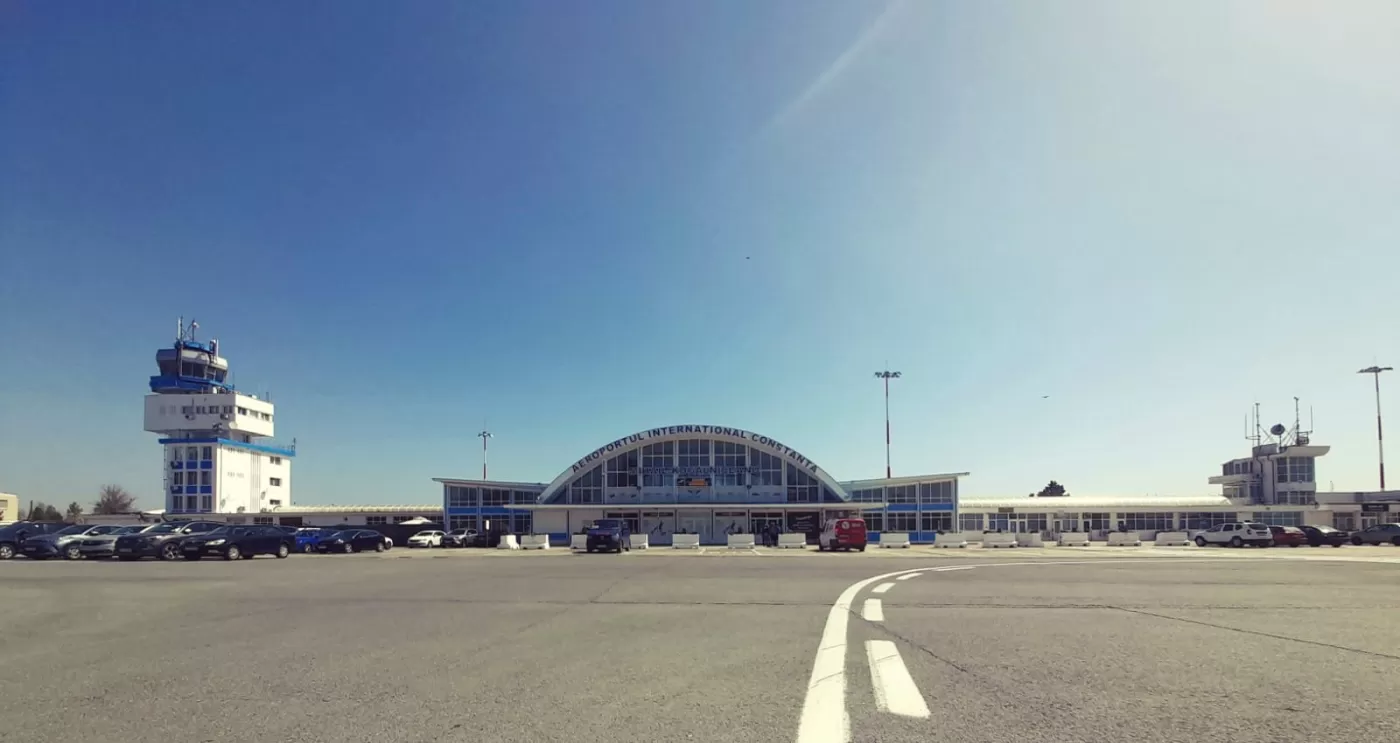
Photo source: aeroportul-otopeni.info
Why land here:
Best for summer travel, seaside stays, or access to the Danube Delta.
Where you can go from here:
- Constanța
One of Romania’s oldest continuously inhabited cities, founded as the Greek colony of Tomis. Visitors encounter layers of Greek, Roman, Byzantine, and modern history, alongside a seafront promenade and historic casino building. - Black Sea coast & resort towns
Stretching north and south of Constanța, the coast offers a mix of lively resorts and quieter seaside areas. Travel here is highly seasonal, with summer being the peak period. - Danube Delta
From Constanța, travelers can reach Tulcea and continue by boat into the Delta — a vast network of waterways, reed beds, lakes, and islands. The Delta is a UNESCO Biosphere Reserve and one of Europe’s most important wildlife habitats, especially for birdlife. - Dobrogea region
An often-overlooked area with ancient ruins, vineyards, rolling hills, and a multicultural heritage shaped by Greeks, Romans, Tatars, and Turks. This region offers a very different historical narrative from Transylvania or Moldavia. - Slow, nature-based travel
The rhythm here is dictated by water, seasons, and wildlife rather than cities and monuments. Experiences are centered around boat travel, fishing communities, and nature observation.
Airlines operating here:
Wizz Air, Turkish Airlines
Other Airports in Romania (Secondary & Regional)
| Airport | IATA | Region Served | Typical Use | Airlines (indicative) |
| Oradea International Airport | OMR | Crișana / Western Romania | City breaks, cross-border itineraries | TAROM, Lufthansa, LOT, AnimaWings, HiSky |
| Arad International Airport | ARW | Western Romania | Charter, occasional scheduled flights | Seasonal / charter |
| Satu Mare International Airport | SUJ | Northern Romania | Regional access, diaspora travel | TAROM, WizzAir, HiSky |
| Maramureș International Airport | BAY | Maramureș | Limited regional access | TAROM, HiSky |
| Târgu Mureș Transylvania Airport | TGM | Central Transylvania | Charter, low-cost (variable) | Aegean Airlines, Animawings, Corendon Airlines, HiSky, SKY Express, Wizz Air, Tailwind Airlines, SkyUp Airlines, Southwind Airlines, MGA Airlines, Bees Airlines Romania |
| Bacău International Airport | BCM | Eastern Romania | Low-cost & regional travel | Wizz Air, Dan Air, Aeroitalia |
| Suceava International Airport Stefan cel Mare | SCV | Bucovina | Bucovina monasteries, regional access | TAROM, Wizz Air, AnimaWings |
| Craiova International Airport | CRA | Oltenia / Southern Romania | Low-cost city & outbound travel | Wizz Air, TAROM, AnimaWings, Tailwind, Sky Express, HiSky, Nouvelair, Cyorus Airways, AlbaStart.es, AlMasria Universal Airlines |
| Tulcea Danube Delta Airport | TCE | Danube Delta | Seasonal Delta access | Charter flights only |
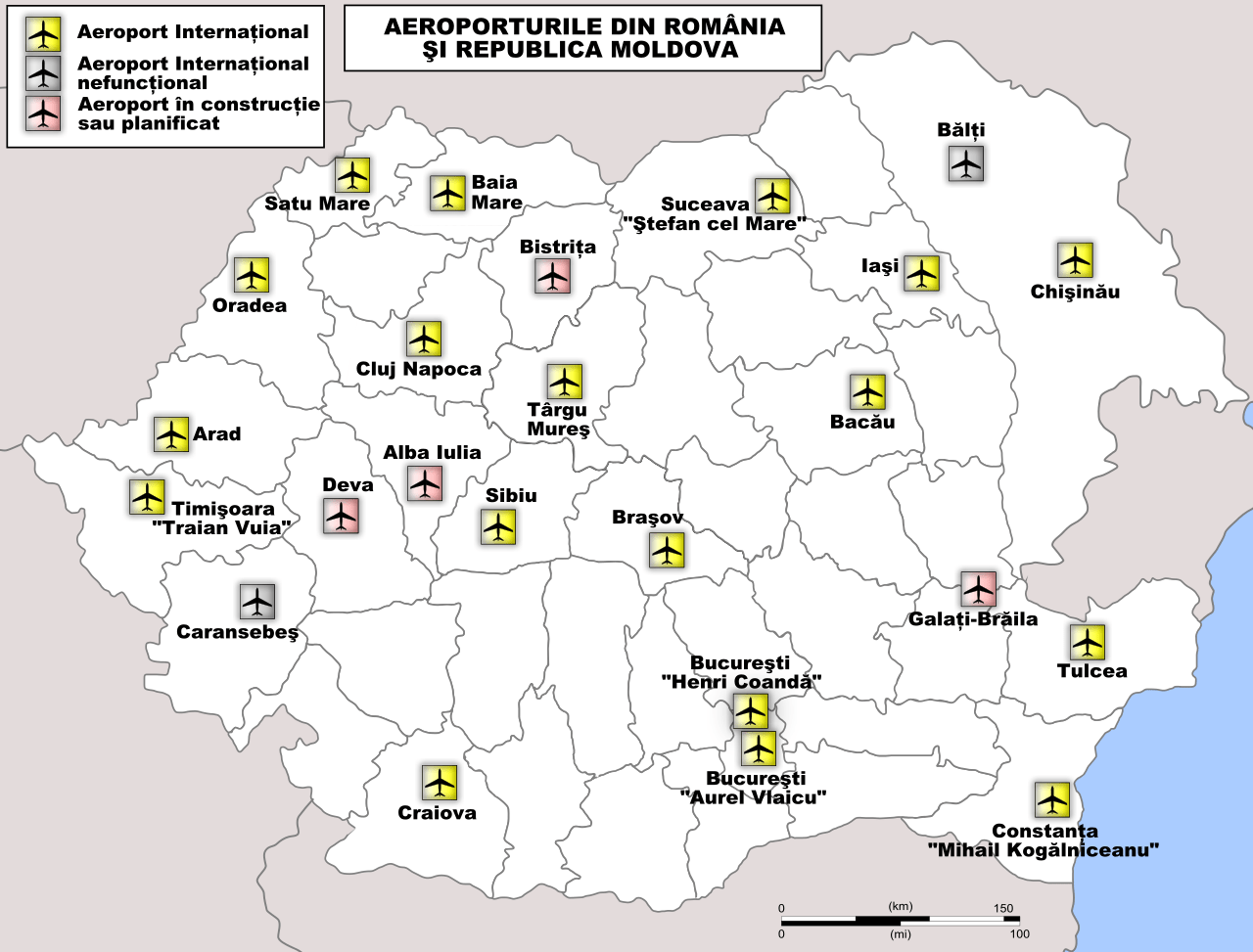
Photo source: wikipedia.org
What you need to know about airports in Romania
Is it better to fly into Bucharest or directly into Transylvania?
It depends on the itinerary. Bucharest offers the widest range of international connections and is ideal for first-time visitors or multi-region trips.
Flying directly into Transylvania (via Cluj-Napoca, Sibiu, or Brașov) is usually more efficient if the trip focuses mainly on medieval towns, castles, and rural areas, as it reduces driving time.
Are there direct international flights to Romania from the US or UK?
From the UK, there are multiple direct flights to Bucharest and several regional airports.
From the US, there is currently one year-round direct flight from New York, but most travelers connect through major European hubs such as London, Paris, Frankfurt, Amsterdam, or Istanbul before continuing to Romania.
Can I fly into one Romanian airport and leave from another?
Yes. Open-jaw itineraries are very common in Romania and work well for circular or one-way routes, such as arriving in Bucharest and departing from Cluj-Napoca or Iasi. This is often the most efficient way to explore the country.
Are domestic flights common in Romania?
Domestic flights exist but are limited. They mainly connect Bucharest with a few regional cities. For most itineraries, private transfers or trains are more practical and flexible, especially when visiting multiple regions.
Does Romania have year-round international flights or mostly seasonal ones?
Major airports such as Bucharest, Cluj-Napoca and Iasi have strong year-round international connections. Smaller regional airports often rely on seasonal routes or reduced winter schedules, especially those serving leisure destinations.
Which Romanian airports have the most connections?
Bucharest has by far the most international connections, followed by Cluj-Napoca and Iași. These airports offer the best flight frequency and reliability throughout the year.
Is Romania part of Schengen?
Yes. Romania is part of the Schengen Area. Internal border controls were lifted first for air and sea travel from 31 March 2024, and then for land borders from 1 January 2025, making Romania fully integrated in Schengen travel.
Do I need to go through passport control when arriving in Romania?
- Arriving from another Schengen country: normally no passport control (similar to domestic-style arrivals). Spot checks can still happen occasionally.
- Arriving from a non-Schengen country (e.g., UK, US, Turkey): yes, you will go through passport control as you are entering the Schengen Area.
Can I book a private transfer from the airport?
Yes. Private airport transfers are widely available in Romania and are often the most comfortable and reliable option, especially for travelers arriving late, traveling with luggage, or heading to rural areas.
Is English spoken at Romanian airports?
Yes. English is widely spoken at international airports in Romania, including by airline staff, border police, and information desk personnel.
Are Romanian airports accessible for travelers with reduced mobility?
Major Romanian airports are equipped with accessibility services, including assistance for travelers with reduced mobility. It is recommended to request special assistance in advance through the airline.
If I only have one week in Romania, where should I land?
For a first visit, Bucharest is the safest option due to connectivity and flexibility.
If the itinerary focuses mainly on Transylvania, landing directly in Cluj-Napoca or Sibiu is usually more time-efficient.
If I want castles and medieval towns, which airport is best?
Brașov-Ghimbav, Sibiu, and Cluj-Napoca are the most convenient airports for accessing medieval towns, fortified churches, and famous castles such as Bran and Peleș.
If I want nature and rural areas, which airport should I use?
Cluj-Napoca works well for the Apuseni Mountains and Maramureș, while Sibiu is a good base for rural Transylvania and the Carpathian Mountains. For the Danube Delta, travelers usually fly into Bucharest or Constanța and continue by road.
If I want to avoid long drives, where should I fly into?
Flying into a regional airport close to the main focus of the trip is the best way to minimize driving. Instead of defaulting to Bucharest, choosing Cluj-Napoca, Sibiu, or Brașov can significantly shorten transfer times.
At Rolandia, we operate a range of established tours starting from Bucharest, Iași, Brașov, and Cluj-Napoca, covering Romania’s main cultural and natural regions through carefully planned routes. Beyond these ready-made programs, Rolandia also designs tailor-made itineraries built around individual interests, travel pace, and logistics, whether that means focusing on one region or combining several areas into a single journey. Based on your plans, Rolandia can advise on the most suitable airport for arrival and departure and provide all related services, including private airport transfers, intercity transportation, accommodation coordination, and on-the-ground support throughout the trip.
Related Trips
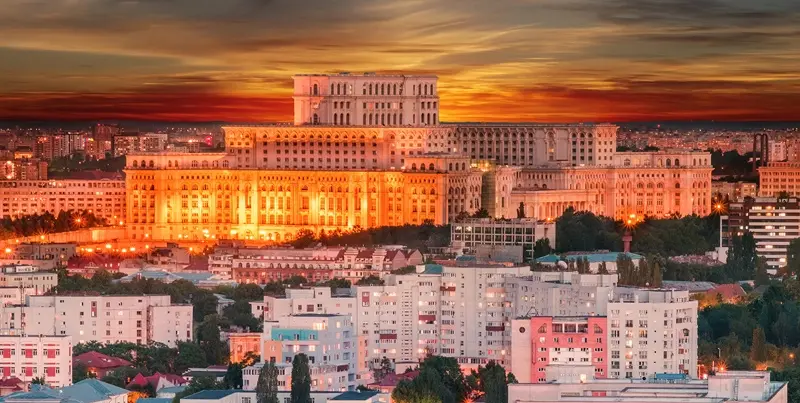
Tours from Bucharest
Private Tours
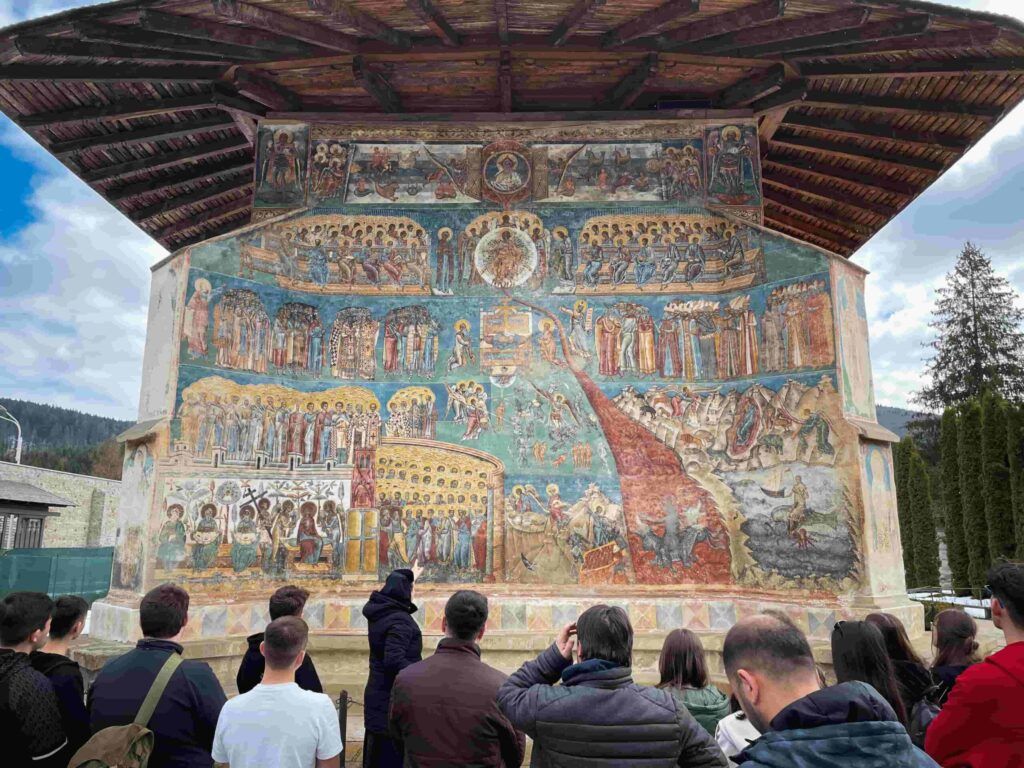
Tours from Iasi
Private Tours
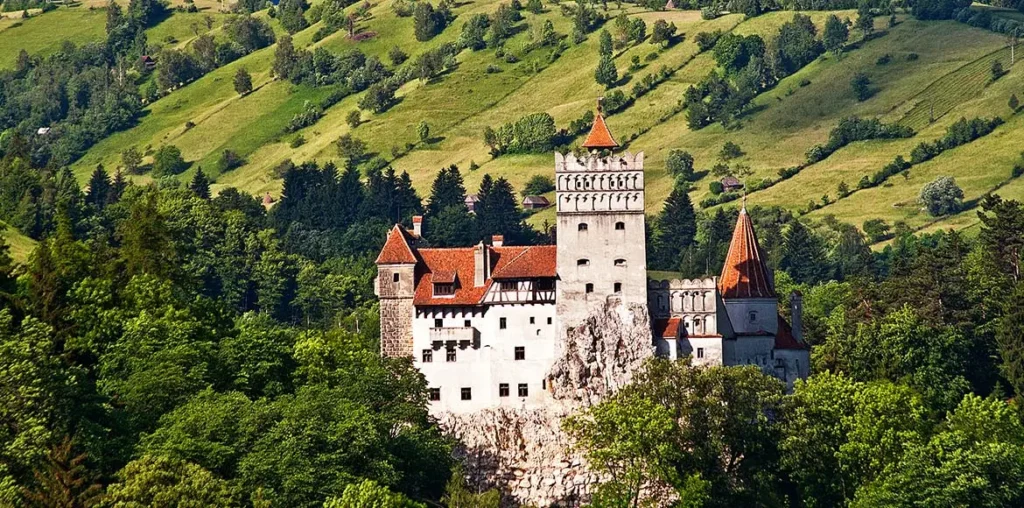
Tours from Bucharest
Shared Tours
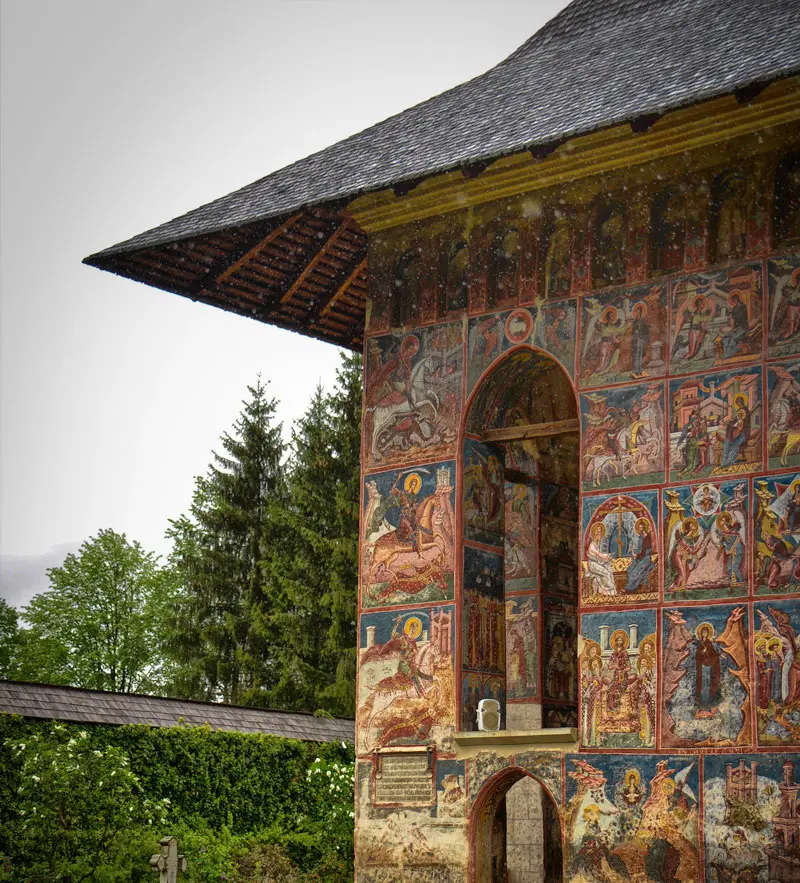
Tours from Cluj Napoca
Private Tours
Other articles

For a first visit, plan at least 5–7 days to…

The best time to visit Romania is late spring (May–June)…

A practical guide to airports in Romania: main international airports,…

Romania is not an easy country to explain in a…

Romania is a country where medieval citadels rise above cobbled…

Tired of overtourism in Europe? Romania offers the culture, landscapes,…